
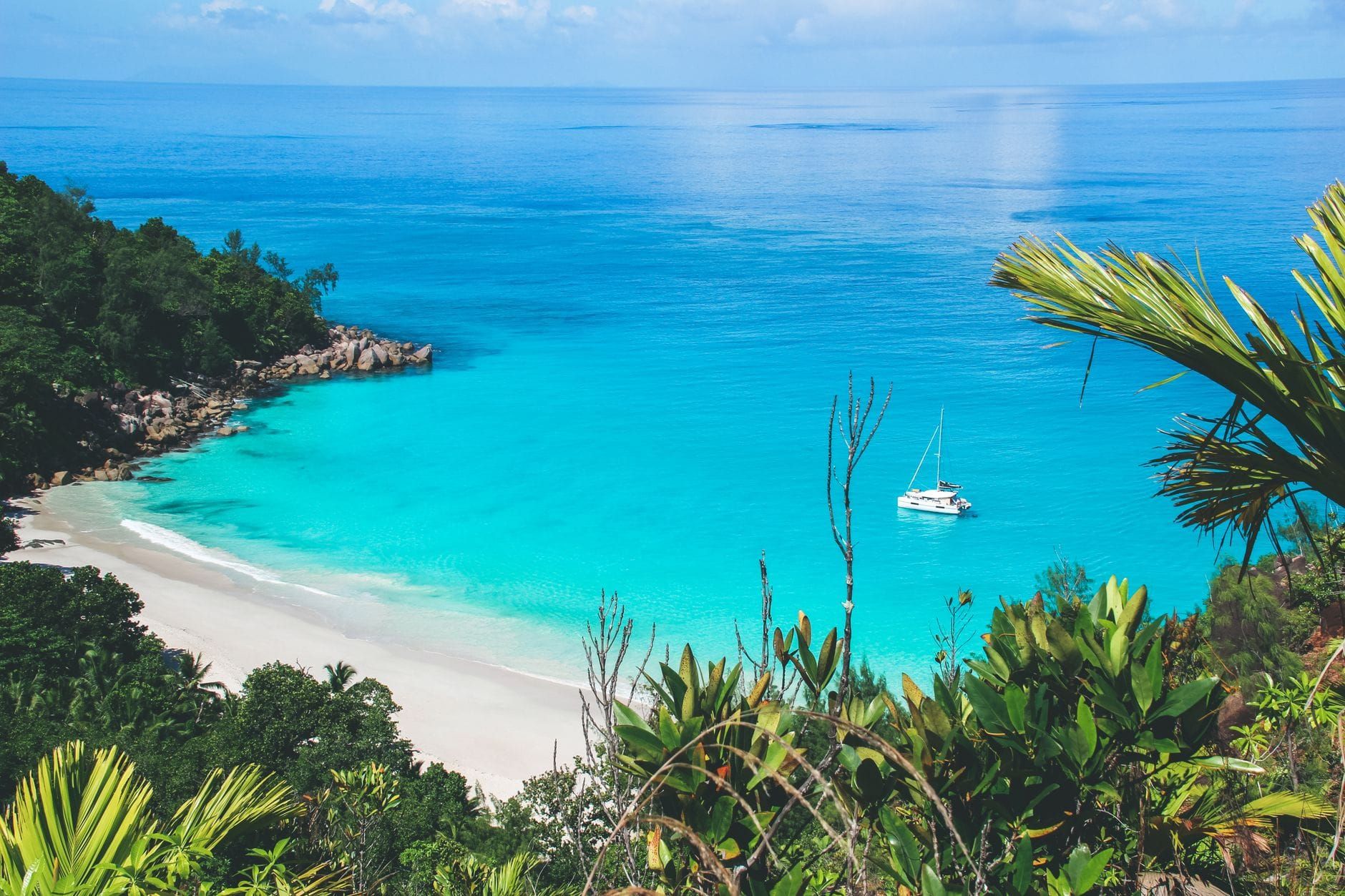
With just 350,000 visitors a year for 120,000 residents, the Seychelles are making a deliberate choice: cap tourist volumes to protect the environment and maintain a premium positioning. A strategy that stands apart from mass-market neighbours, but one that rests on a fragile balance.
A Deliberately Different Model from the Maldives
While the Maldives welcome 2 million tourists per year, the Seychelles receive just 350,000 — across a far larger territory and a population of 120,000. This gap is not a lag: it is a deliberate governance choice. The archipelago has explicitly stepped away from mass tourism to cultivate a premium offering, with mid-range accommodation starting at €200 per night on La Digue, and luxury resorts that underpin the islands’ global reputation.
Tourism accounts for nearly 80% of GDP in the Seychelles — the highest sectoral dependence in the Indian Ocean basin. This concentration exposes the archipelago to any aviation or geopolitical disruption, as the Covid crisis made painfully clear.
Air Connectivity Is Being Strengthened
In 2026, several airlines are resuming or expanding routes to Mahé: Qatar Airways and Turkish Airlines are returning to international schedules, Aeroflot is relaunching flights from Moscow, and Air Seychelles is inaugurating seasonal direct flights from Paris-CDG. New European routes to Rome and Istanbul complete the offer. These connections target the four main source markets: France, Germany, Italy and Russia.
Conservation as a Competitive Edge
The Seychelles protect 50% of their terrestrial territory and around 30% of their maritime space. This conservation policy — partly funded by entry fees (€30 for Vallée de Mai, €10 for protected beaches) — has become a sales argument in its own right. The tourist who pays to visit a pristine primary forest is exactly the target profile: financially solvent, environmentally conscious, and respectful of ecosystems.
Why It Matters
The Seychelles model poses a direct challenge to other island territories in the Indian Ocean. Can you grow in volume and remain premium? The Seychelles answer is clear: no. Choosing low flow protects ecosystems, maintains high prices and gives the archipelago negotiating power with tour operators. In a basin where Mauritius, Réunion and Madagascar compete for arrivals, the Seychelles are playing an entirely different game — and they own it.