
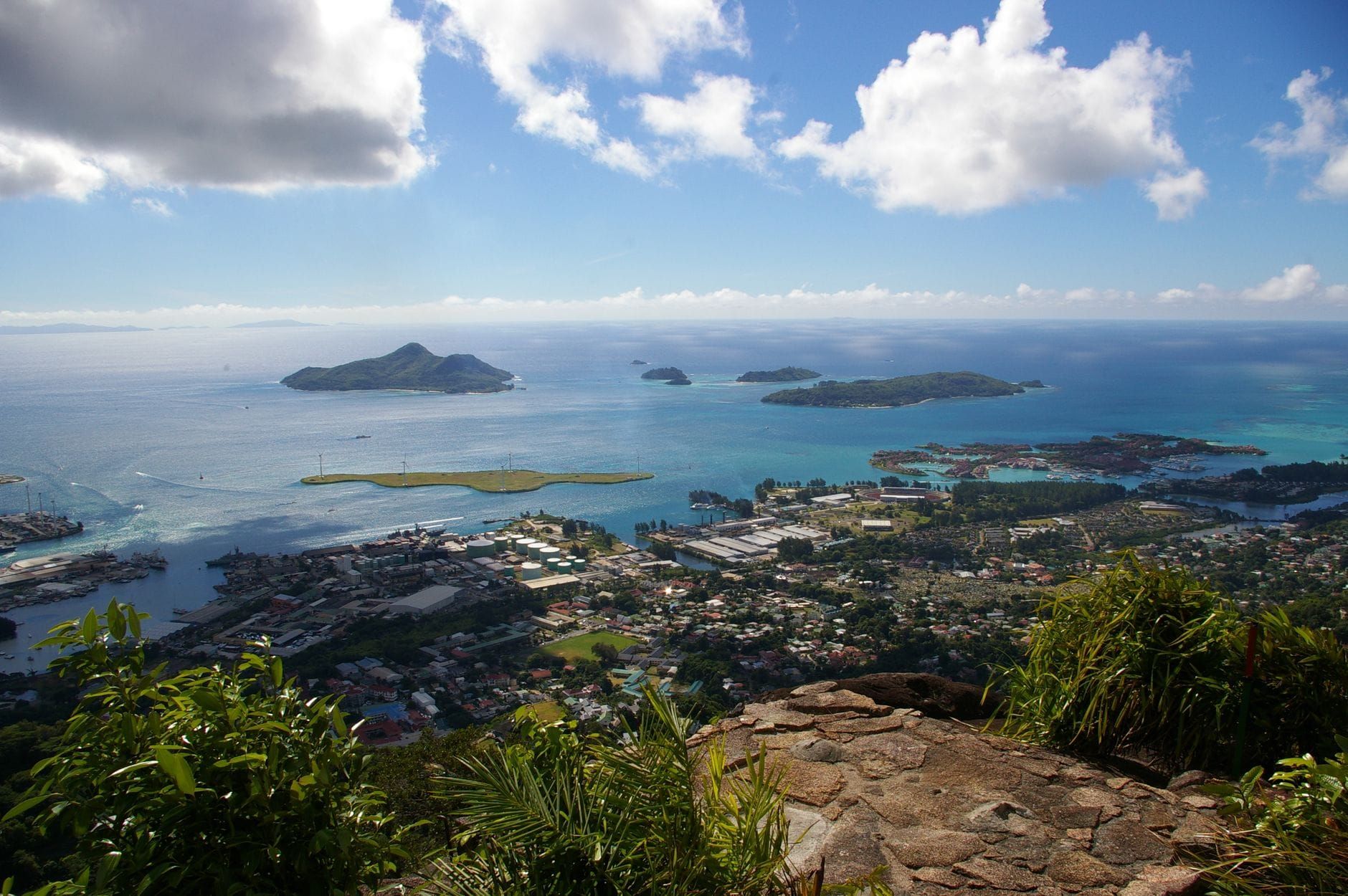
The Seychelles are targeting $800 million in investments over 25 years to transform their energy mix. At African Energy Week 2026 (October 12–16, Cape Town), Minister Marie-May Jérémie is showcasing the archipelago's flagship projects, including the Seysun Lagoon floating solar facility.
An archipelago dependent on fossil fuels, but ambitious
Like most small island developing states (SIDS), the Seychelles relies heavily on imported diesel for electricity generation. The government's goal is to reach 15% renewable energy by 2030, under a seven-year World Bank-backed programme. In the long term, the country needs to mobilise "over $800 million" over 25 years to transform its energy mix, according to the Ministry of Environment, Climate, Energy and Natural Resources.
Seysun Lagoon: the showcase project
The Seysun Lagoon floating solar plant, developed by French group Qair, is currently under construction and expected to be operational in 2026. Rated at 5.8 MW, it will be moored on the lagoon of the main island of Mahé. This project illustrates the Seychelles' strategy: attracting international private investors to "bankable" projects backed by a reformed regulatory environment.
Reforms to attract capital
To reassure investors, the Seychelles has put in place an independent power producer (IPP) framework, standardised power purchase agreements (PPAs) and improved grid access. Minister Jérémie highlights the archipelago's desire to "strengthen policy alignment and showcase bankable projects" at African Energy Week. Ghana, the Seychelles and São Tomé share a dedicated panel on energy investment pipelines in Africa.
Why this matters
With Africa's highest GDP per capita ($17,670), the Seychelles have the means to pursue rapid transformation — and to show the way for other Indian Ocean islands. The success or failure of Seysun Lagoon will be closely watched across the region. For if the Seychelles cannot finance their energy transition at their level of development, what chance do other archipelagos in the basin have?