
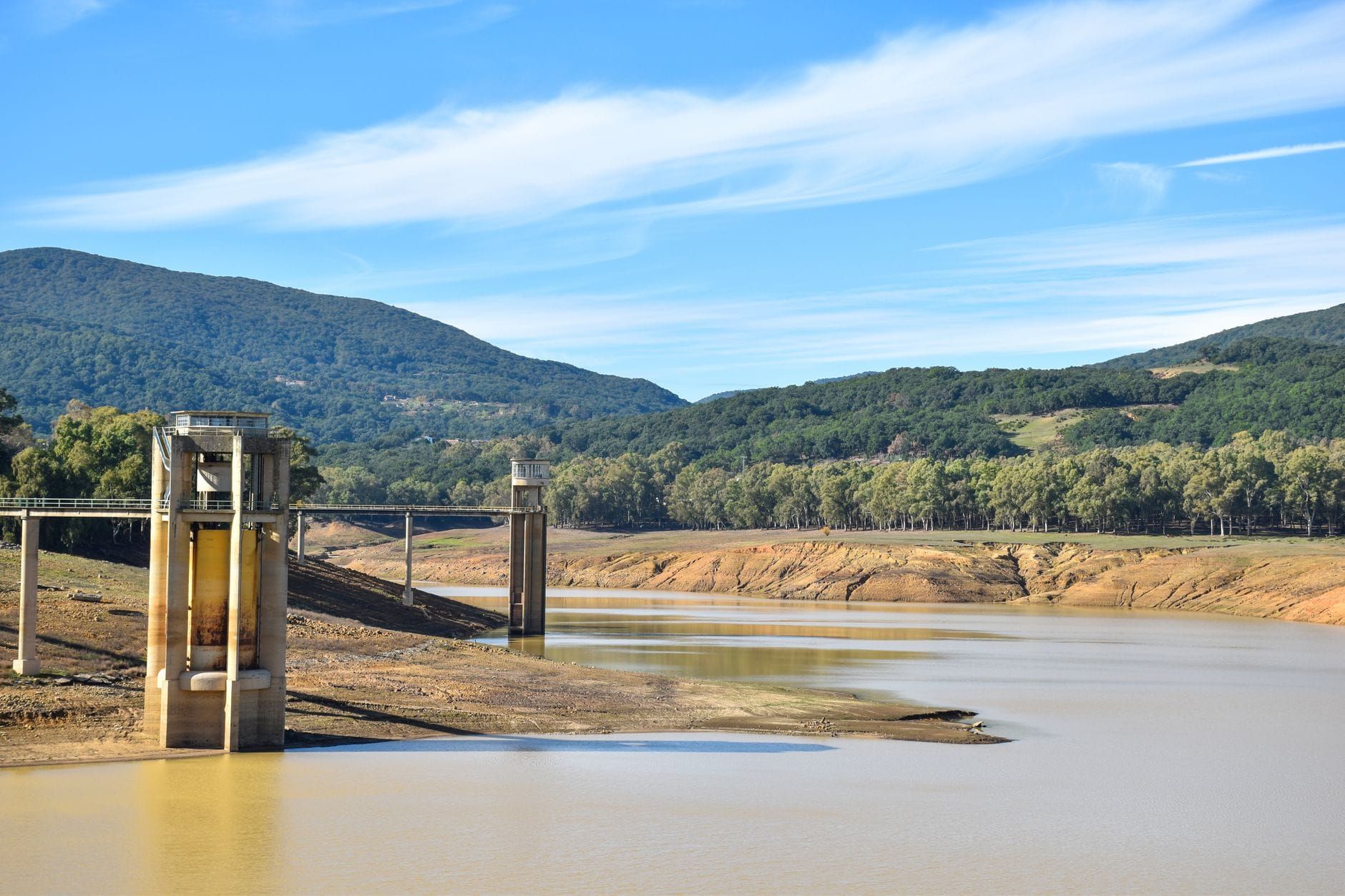
Mauritius's seven main reservoirs were just 56.8% full at the start of October — compared to 87% at the same time in 2025. With experts warning of a potential total disruption within two months, the Council of Ministers has adopted a ten-point emergency plan.
Record Low at Mare-aux-Vacoas
The island's largest reservoir, Mare-aux-Vacoas, has dropped to only 35.5% of its capacity. Of its roughly 26 million m³ potential, only 9.19 million m³ remain — a loss of 13.51 million m³ over twelve months. As a result, daily flow to the La Marie treatment station has plummeted from 110,000 m³ to between 56,000 and 61,000 m³ — a drop of more than 40%. Across all seven reservoirs (total capacity: 92.2 million m³), just 52.37 million m³ were available as of 10 October, according to the Central Water Authority (CWA). Per capita consumption is estimated at around 190 litres per day.
A Government Plan in Ten Steps
The Council of Ministers has ordered nine new boreholes to inject an additional 30,000 m³ per day into the Mare-aux-Vacoas catchment by end of October. The Mare-Longue–La Marie pipeline capacity will be doubled from 15,000 to 30,000 m³/day. Around 4,000 m³ will be drawn daily from the Pétrin and Papayes rivers. Fifteen pressure filters ordered by the CWA are expected by late November.
Households will benefit from extended grants: Rs 10,000 for two tanks, Rs 4,000 for a pump, and up to Rs 1,000 for connection works. Private tanker trucks and liaison agents have been deployed in the worst-affected areas. P. M. K. Soonarane has been appointed Director General of Public Utilities on contract to oversee the entire programme.
Social Tension Spills Over
The crisis is no longer just an engineering problem. In Phoenix, residents have been blocking roads and burning tyres for several days; unrest has spread to Camp-Levieux. Historian Jocelyn Chan Low links the protests to rising living costs and fuel prices, noting that «there are limits to communication». Engineer Vassen Kauppaymuthoo has warned that a total supply failure is «a possible scenario within two months» if rainfall does not return.
Why It Matters
Mauritius relies on its reservoirs to supply water to nearly 1.3 million people as well as its tourism and sugar industries. Severe rationing would directly hit hotels — a sector worth around 20% of GDP — and damage the island's reputation as a premium Indian Ocean destination. A long-term decline in rainfall (estimated at 57 mm per decade by specialists) combined with ageing infrastructure, some dating back to the 19th century, make this both an immediate emergency and a structural challenge.
Sources: L'Express Maurice / Allafrica (October 2026); Council of Ministers, Mauritius.